Teams and leadership
Teams work better when they know each other's colour.
Half-day sessions after which teams stop guessing about each other. Evelyn brings years of hands-on leadership and turns a simple colour model into conversations your team can use on Monday morning.
The language
Four colours. Everyone has all four.
The model describes preferences, not boxes. The difference lies in the order and the intensity. Teams that recognise this in themselves and in each other hold shorter meetings and clash less.
Nobody is one colour. What follows is what you often see when one colour leads.
When red leads
Results-driven
Wants to know where this is going and who decides.
- In an email
- Reads the first two lines. No question in them means a one-line reply, or none at all.
- In a meeting
- Asks after ten minutes what needs deciding. Goes quiet once it's settled, already on to the next thing.
- Under time pressure
- Takes charge and hands out tasks. Fast, sometimes without asking who already did what.
- Needs from others
- A clear question, a deadline and the freedom to choose the route.
- Thrown off balance by
- Endless consultation, decisions that keep coming back, and not knowing who actually decides.
When yellow leads
Enthusiastic
Thinks out loud and works best with people around.
- In an email
- Writes the way people talk, with an exclamation mark and one idea too many. Would rather call than go back and forth three times.
- In a meeting
- Brings the first five ideas and the first laugh. Drifts off when every point has to be written up before anything can move.
- Under time pressure
- Stays optimistic and pulls others along. Sometimes says yes to more than fits in a week.
- Needs from others
- Room to think with others, recognition, and someone who follows up on what was promised.
- Thrown off balance by
- Long stretches of working alone, ideas shot down on the spot, rules without a reason.
When green leads
Caring
Notices how people are doing and keeps the team together.
- In an email
- Reads between the lines. A curt message lingers longer than you'd think.
- In a meeting
- Says little in the full group and a lot afterwards, one to one. Notices who has gone quiet.
- Under time pressure
- Keeps going, picks up what others leave lying, and only says late that it's too much.
- Needs from others
- Time to think it over, the reason behind a change, and being asked for their own view.
- Thrown off balance by
- Change without warning, conflict nobody names, decisions about people made without those people.
When blue leads
Analytical
Wants to understand it first, then do it right.
- In an email
- Reads all of it, attachment included. One wrong figure undermines the rest of the message.
- In a meeting
- Has read the papers and asks the question nobody thought of. Would rather decide tomorrow than half-decide today.
- Under time pressure
- Gets quieter and more precise. Delivers on time, but would rather deliver less than something unfinished.
- Needs from others
- Facts, an agenda in advance, and time to check before anything becomes final.
- Thrown off balance by
- Gut-feeling decisions, vague expectations, and a different plan every week.
The session
One half day. Four hours that stay with you.
The half day itself takes four hours. Before it comes an intake, after it an agreement card and a check six weeks later.
Before the session
- 2 to 3 weeks ahead · 30 min
Intake with the team lead
An online conversation about what is rubbing and what the team wants to achieve. You get a one-page session brief back to confirm.
- Beforehand · 20 min
Personal questionnaire
Online, whenever it suits you. Everyone receives their own profile.
- Agreed in advance
Who sees what
Your personal profile belongs to you. The team sees the team map. The manager or HR sees nothing more without the team's consent.
During the half day
- 60 min
The four colours
What they mean, and where you recognise yourself.
- 75 min
Discovering your profile
In pairs and as a group. Where are your strengths, where are your blind spots?
- 60 min
The team map
Everyone on one map. Who is missing, who clashes, who complements?
- 30 min
Agreements for Monday
Three concrete agreements the team takes back to work.
After the session
- Within 48 hours
The agreement card
The three agreements, who looks after each one, and a photo of the team map. As a PDF, in the team's language.
- After six weeks · one click
The check
Every participant gets one question: are we keeping to our agreements? The manager sees the total, not who answered what.
Formats
Choose what fits your team.
Team session
- Intake and session brief beforehand
- Personal profile for every participant
- Workshop on location
- Agreement card within 48 hours, check after six weeks
Profile conversation
- Personal profile
- One-to-one debrief
- For team leads and new managers
Keynote
- For kick-offs and team days
- Interactive, with a live colour poll
- No preparation needed
A first impression
Which colour leads you today?
Four quick questions. A game, not a profile: the real profile comes with the session.
Question 1 of 4
A meeting runs over. What do you do?

About Evelyn
She knows teams from the inside.
Evelyn has worked with people and teams for years, across borders too. She saw how often teams get stuck on communication while the content was fine. The colour model gave her the words to make that discussable, and she enjoys passing them on.
She knows what a Monday morning in a team feels like.
Beyond the sessions
On stage, on the padel court, and at home.
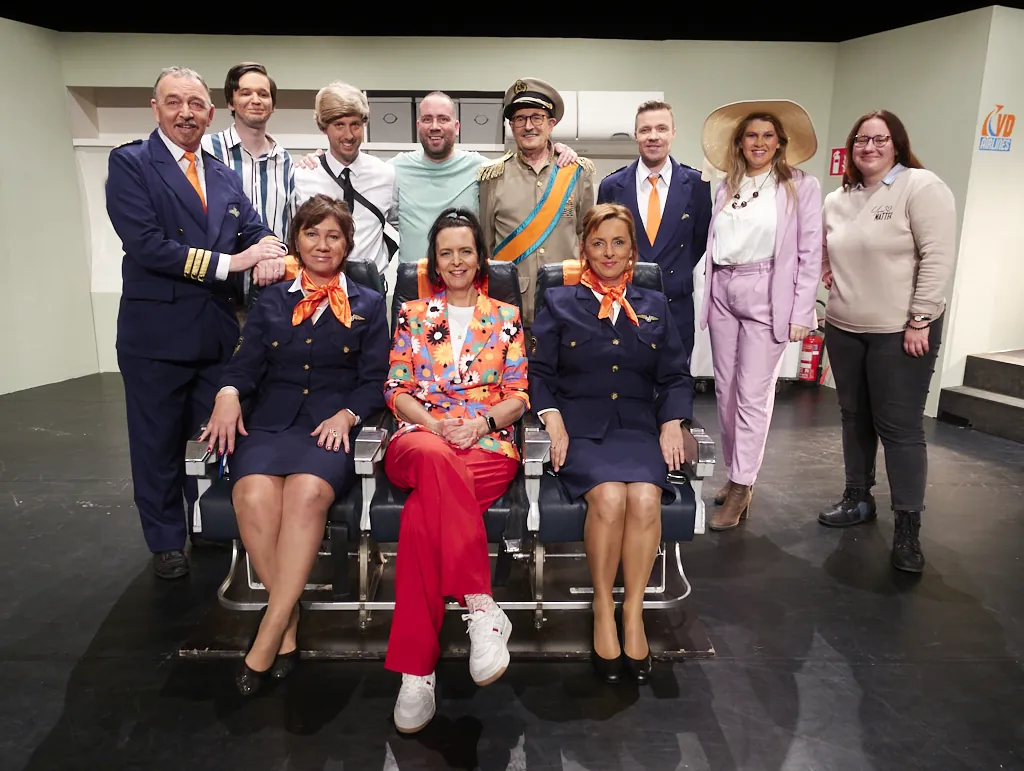


Evelyn acts with the WTT Humor theatre company, including in De Tand van Ferdinand. Anyone who can make a room laugh knows how to bring a group along.
She is a mum, and in her free time she loves to play padel.
Photos: WTT Humor, De Tand van Ferdinand (2024)
Plan a session
Pick a moment that works.
Choose what you need, a day and a half day. Evelyn confirms the moment personally.